
The UCR vehicles screen: MCS-150 autofill vs counting it yourself
Last updated September 18, 2026 · written from the live UCR.gov vehicles screen
UCR.gov gives you two ways to answer the vehicle question. Option A autofills the count from your most recent MCS-150. Option B asks you to enter the commercial motor vehicles you operated over a fixed 12-month window — for the 2027 registration year that window is July 1, 2025 to June 30, 2026. Either way the count splits into "Straight Trucks and Tractors" and "Passenger Vehicles", there is an add-or-exclude question underneath, and the portal computes a "Vehicle Total" from your answers. That total, and nothing else, picks your fee bracket. Trailers never count. Vehicles used exclusively in intrastate commerce can generally be excluded.
Eight of the nine screens on UCR.gov are admin. This one is the money. Every other question — who is filing, which classifications apply, which address to bill — changes nothing about the amount. This screen changes all of it, and it does so through a control almost nobody describes accurately, because www.ucr.gov is a JavaScript shell behind a security check and search engines have never read a word of it. What follows was written from the screen itself.
Option A and Option B — the choice at the top of the screen
Before you type a number, the portal asks how you want to answer. These are not two labels for the same thing; they draw on different data, and for a carrier whose fleet has moved they can produce different totals and therefore different fees.
The portal takes the count straight off your latest MCS-150 filing. One click and the boxes are populated. This is the right choice when that filing is current — and you can check whether it is before you get here: the registration-history dashboard, two screens earlier, displays the MCS-150 "Last Updated" date in its left panel for exactly this reason.
You enter the commercial motor vehicles you operated during the fixed measurement window. This is the right choice when the MCS-150 is stale or the fleet has genuinely changed. It puts the number in your hands, which means it also puts the responsibility for it there — enter what you actually operated.
A practical way to decide: if the MCS-150 "Last Updated" date is inside the last year and the fleet has not moved since, take Option A and save yourself the arithmetic. If the date is old, or you have sold or parked units since, work the count out yourself and use Option B — or, better, update the MCS-150 first so the federal record and the registration agree.
The 12-month window is fixed, and it is not the last 12 months
Option B asks about a specific period, and the period does not move with the date you file. It ends the June before the registration year. For 2027, that is July 1, 2025 to June 30, 2026. The 2026 registration year asked for July 1, 2024 to June 30, 2025 — the same rule, one year back.
Three consequences follow from that, and each of them catches somebody out. First, a truck you bought in August — after the window closed — is not part of this year's count, even though you are running it today. Second, a truck you sold in March, inside the window, was operated during the window and generally does belong in the count. Third, registering in October and registering in December produce exactly the same answer, because the window does not shift. The question is genuinely "what did you operate during those twelve months", not "what do you have in the yard".
July 1, 2025 to June 30, 2026
Commercial motor vehicles operated in interstate commerce during this period. Not a snapshot of today's fleet.
What the screen actually asks for
Underneath the Option A / Option B choice, the count is split in two, followed by a question most people click past.
| On screen | What it means |
|---|---|
| Straight Trucks and Tractors | Self-propelled power units used to haul freight. Tractors, straight trucks, box trucks over the threshold. Trailers of every kind are excluded. |
| Passenger Vehicles | Buses, motorcoaches, shuttles and passenger vans. Usually 0 for a freight carrier — but they are power units, and they are priced the same way. |
| Add or exclude any commercial motor vehicles? | Answer Yes when units need to come out of the count — most commonly vehicles used exclusively in intrastate commerce. This is the question carriers skip. |
| Vehicle Total | Computed by the portal from your answers. This is the number that picks your bracket. Check it before you continue. |
Trailers never count
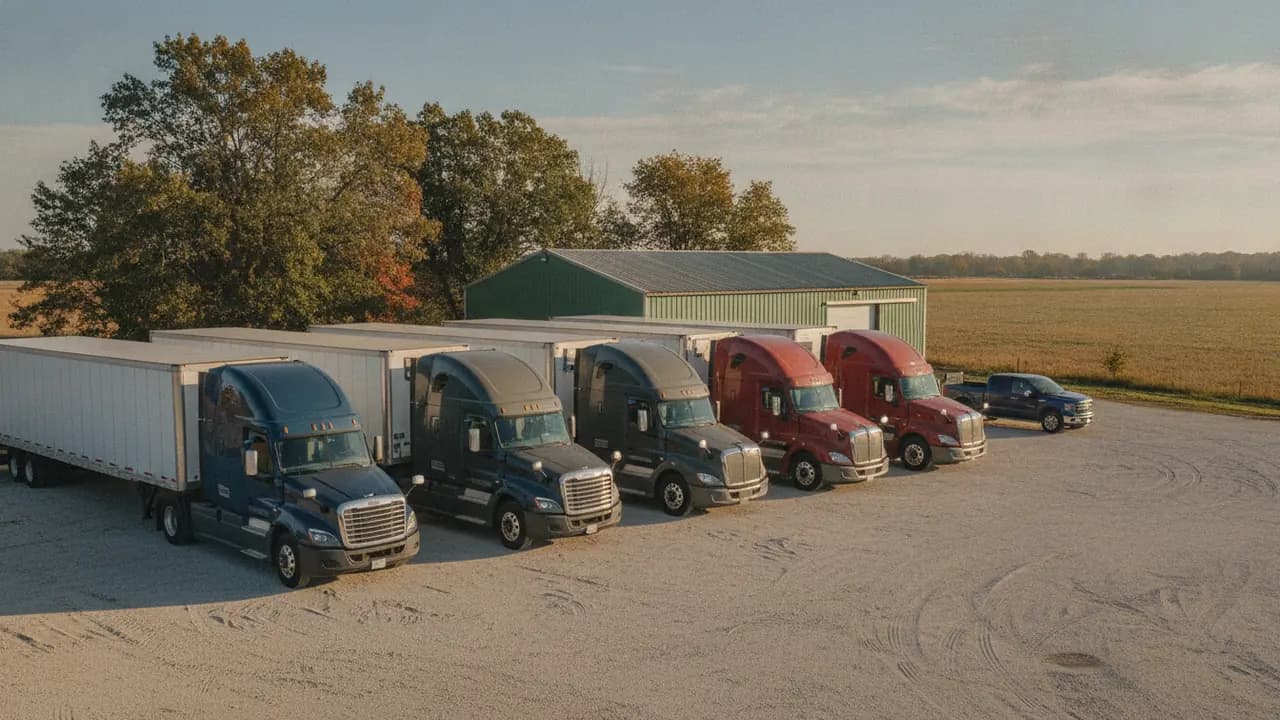
UCR is priced on power units — self-propelled commercial motor vehicles. Trailers, semi-trailers, dollies and converter gear are not power units and are never part of the total, no matter how many of them are titled to the business or listed on the insurance schedule.
This sounds obvious and is the most expensive misunderstanding in the programme, because of where people get their numbers from. A carrier who works off an equipment list, an insurance schedule or a fixed-asset register sees every unit in one column, adds them up, and lands somewhere far above their real count. Eight tractors and twenty-two trailers is a vehicle count of eight, not thirty — and those two answers sit in different brackets with a difference of $830 between them. Count what moves under its own power. Nothing else.
The add-or-exclude question, and the bracket it can save
Below the two count boxes, the portal asks whether you need to add or exclude any commercial motor vehicles. It is one line, it defaults to the quiet answer, and it is the most common place a carrier overpays by a full bracket.
What comes out here, most often, are vehicles used exclusively in intrastate commerce. UCR is a registration for interstate operation; a unit that never participates in interstate commerce is generally excludable from the count. Think of the dedicated in-state delivery truck at a mixed fleet, the yard unit that never leaves the county, or the local straight truck on a purely intrastate contract while the tractors run over the road.
A unit that crosses a state line even occasionally is not exclusively intrastate. Neither is one that runs a leg of a longer interstate movement without leaving the state — a container drayed from a port to an in-state warehouse is usually still part of an interstate or international journey. The exclusion is real and it is worth using where it applies, but it applies to genuinely local equipment, and the count you submit is one you are certifying. If you are not sure a unit qualifies, leave it in.
What the Vehicle Total is worth — the 2027 brackets
One fee covers the whole fleet for the year. It is not charged per truck, which is why the brackets behave as steps rather than a rate: inside a bracket an extra unit costs nothing, and at the top of one it costs the entire width of the next.
| Vehicle Total | 2027 government feeyou pay this on UCR.gov | EasyUCR service feeoptional, paid to us |
|---|---|---|
| 0–2 | $55 | $49 |
| 3–5 | $167 | $69 |
| 6–20 | $333 | $99 |
| 21–100 | $1,163 | $149 |
| 101–1,000 | $5,548 | Contact us |
| 1,001+ | $54,165 | Contact us |
Government fee amounts are set by federal rulemaking and are adjusted between registration years — confirm the current amounts on UCR.gov before you pay. The portal adds its own convenience fee on card and ACH payments.
Where one truck changes the fee
Because the brackets are steps, the cost of a single power unit depends entirely on where you are standing. Go from twelve units to thirteen and you pay the same $333. Go from twenty to twenty-one and the fee moves to $1,163. Here is every edge in the 2027 table.
| One more unit | Fee moves | Cost of that unit |
|---|---|---|
| 2 → 3 | $55 → $167 | +$112 |
| 5 → 6 | $167 → $333 | +$166 |
| 20 → 21 | $333 → $1,163 | +$830 |
| 100 → 101 | $1,163 → $5,548 | +$4,385 |
| 1,000 → 1,001 | $5,548 → $54,165 | +$48,617 |
The 20-to-21 edge is the one that bites hardest in practice, because that is where a great many growing fleets sit. Twenty power units is $333; twenty-one is $1,163; the twenty-first truck costs $830 in registration alone. That is not a reason to misreport a count — it is a reason to be certain the count is right, because a phantom unit left on a stale MCS-150, or a trailer counted as a truck, or an intrastate-only vehicle never excluded, each cost exactly the same $830 as a real truck would.
When the autofill is wrong
Option A is only as good as the MCS-150 behind it. A carrier who filed an MCS-150 three years ago with fourteen trucks, and has since run down to nine, will be shown fourteen — and fourteen and nine are in the same bracket, so nothing happens. The same carrier run down to five would be shown fourteen, and would pay $333 instead of $167 for the year. The autofill does not know, and the portal will not ask twice.
The clean answer is to update the MCS-150 so the federal record matches the fleet, then register against it. That is the filing that is supposed to change when equipment changes, it fixes the problem everywhere rather than once, and it means next October's autofill is right too. Option B is the other route, for the case where the record is behind and you are entering what you genuinely operated in the measurement window. What is not a route is typing a number you cannot support — the count is part of a registration you are certifying.
The dashboard two screens earlier shows the MCS-150 "Last Updated" date precisely so you can make this judgement before the vehicle screen appears. It is worth reading when it goes past. See where it sits in the nine screens.
Check the count before the portal computes it
Enter your USDOT and EasyUCR looks up your real carrier record, reads the power-unit count on your latest MCS-150, and shows the 2027 bracket that count lands in — plus how much headroom you have before the next step. Free, before you pay us anything. You open UCR.gov yourself, answer the vehicle question yourself, and submit it yourself.
UCR vehicle count — common questions
Do trailers count toward UCR?+
No. Trailers, semi-trailers, dollies and converter gear are never counted. UCR is priced on power units — self-propelled commercial motor vehicles such as tractors, straight trucks and buses. A carrier running eight tractors and twenty-two trailers has a vehicle count of eight, not thirty. Counting trailers is the single easiest way to buy a fee bracket you do not owe, and it happens most often to carriers who work from an insurance schedule or an equipment list rather than from their power units.
What is the difference between Option A and Option B on the UCR vehicle screen?+
Option A autofills the count straight from your most recent MCS-150 — one click, and the portal takes the number from that filing. Option B lets you enter the vehicles you operated during a fixed 12-month window yourself; for the 2027 registration year that window is July 1, 2025 to June 30, 2026. Option A is right when your MCS-150 is current. Option B is right when it is stale, or when the fleet has changed since you last filed one.
My MCS-150 autofill is wrong. What do I do?+
Do not accept a number you know is wrong, and do not simply type a lower one over the top of it either. The legitimate route is to update the MCS-150 so the federal record reflects the trucks you actually run, then register. If the fleet genuinely shrank, that is the filing that ought to change. Option B exists for the case where the MCS-150 is out of date and you are entering the real operated count for the measurement window instead — but the number you enter has to be one you can stand behind.
Which 12 months does the UCR vehicle count cover?+
A fixed window ending the June before the registration year. For 2027 that is July 1, 2025 to June 30, 2026. It is not the last twelve months from today, not the previous calendar year, and not what you own on the day you file. Option B is measured against that window; Option A sidesteps the question by taking the count from your MCS-150.
Can I exclude trucks used only inside my own state?+
Generally yes, and this is where carriers most often overpay a whole bracket. The vehicle screen asks whether you need to add or exclude any commercial motor vehicles, and vehicles used exclusively in intrastate commerce can generally come out of the total. "Exclusively" is doing real work in that sentence — a unit that crosses a state line, or runs a leg of an interstate movement, is not exclusively intrastate. A mixed fleet with a genuinely local yard truck or a dedicated in-state unit is the classic case.
What is the Vehicle Total on UCR.gov?+
A figure the portal computes for you from the numbers you confirmed — Straight Trucks and Tractors, plus Passenger Vehicles, adjusted for anything you added or excluded. It is displayed on the same screen, and it is the number that picks your fee bracket. Nothing later in the flow changes it. Read it before you press CONTINUE, and check it again on the summary screen before you submit.
Does going from 20 to 21 trucks really change my UCR fee that much?+
Yes. Twenty power units sits in the 6–20 bracket at $333. Twenty-one crosses into 21–100 at $1,163 — a jump of $830 for one truck. The brackets are steps, not a per-vehicle rate, so the cost of a single unit is either nothing at all or the entire width of a bracket, depending on where you sit.
Do buses and passenger vans count?+
Yes, and they have their own box. The screen splits the count into "Straight Trucks and Tractors" and "Passenger Vehicles", and the portal adds both into the Vehicle Total. A freight carrier normally enters 0 in the passenger box. A carrier running motorcoaches, shuttles or passenger vans enters them there — they are power units like any other and they are priced the same way.
Keep reading
All nine UCR.gov screens in order, written from the live portal.
The five checkboxes one screen earlier, and which ones to tick.
No American Express, ACH/eCheck, and the mail-in trade-off.
Every bracket and what counts as a power unit.
EasyUCR is a private AI software company. We provide AI assistance that helps carriers complete their own UCR registration; we are not a filing service and do not file, submit or pay on anyone's behalf. Not affiliated with, endorsed by, or acting on behalf of the UCR Plan, FMCSA, USDOT or any state agency. You are never required to use EasyUCR — you can register directly at UCR.gov and pay only the government fee. EasyUCR prepares your filing; you enter the values, pay the government fee on UCR.gov and submit, so you are always the filer. We never file, submit, pay or log in for anyone. Information on this page is general guidance, not legal advice, and nothing here is a suggestion to report a count other than the one you actually operated; the portal is updated from time to time, so confirm current amounts, the measurement window and the screens on UCR.gov before you file.